
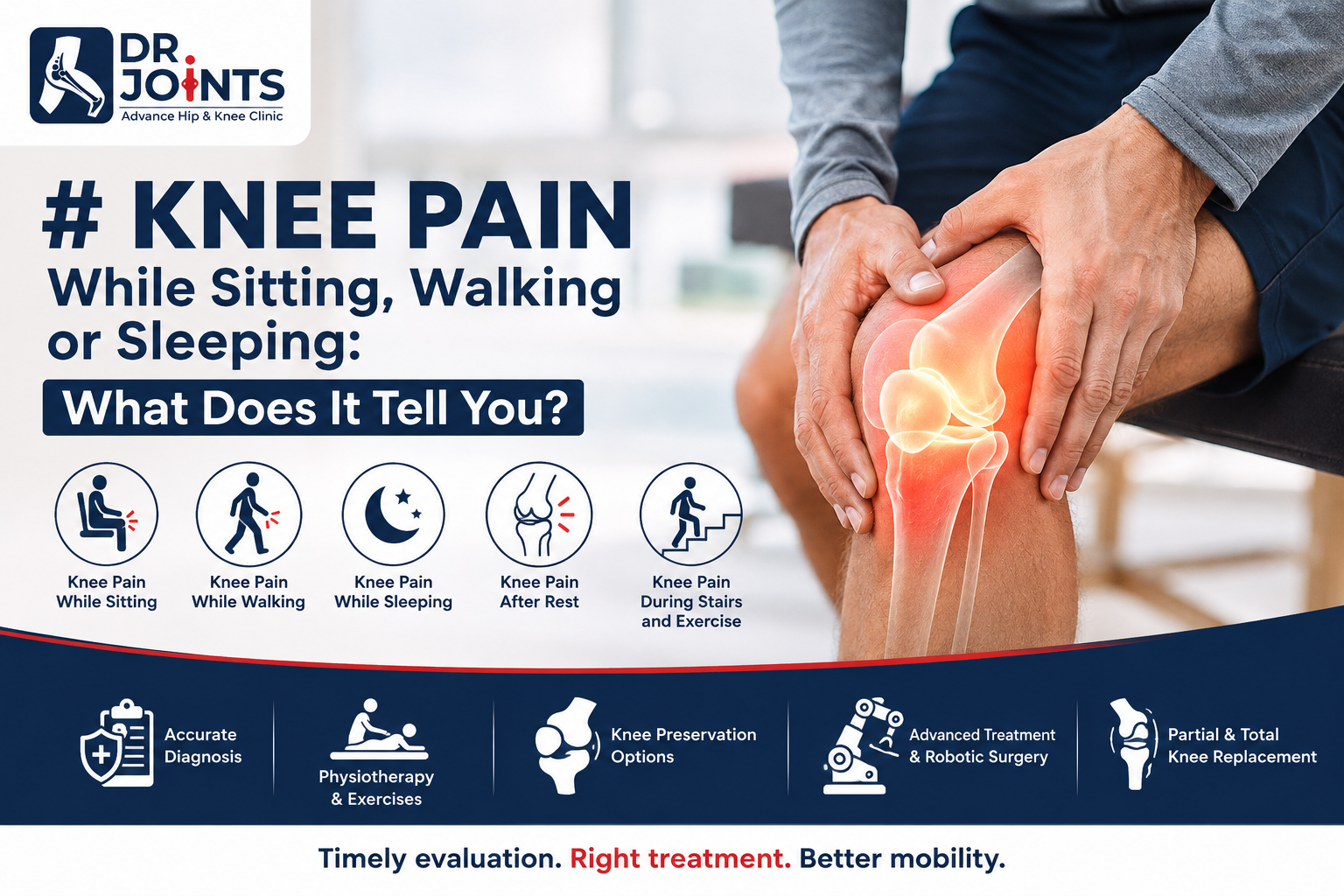
Knee Pain While Sitting, Walking or Sleeping: What Does It Tell You?
Does your knee hurt after sitting for a long time, while walking, or when you are trying to sleep? The situation in which pain appears can sometimes provide clues about what is affecting the joint. Knee pain while sitting, walking, exercising, or resting may result from different conditions, including arthritis, cartilage problems, muscle weakness, overuse, or an injury. Understanding the pattern of pain can help people know when simple lifestyle changes may be enough and when an orthopedic evaluation is needed.
Knee Pain While Sitting: What Does It Mean?
Knee pain while sitting is common in people who spend long hours at a desk, travel frequently, or remain seated with their knees bent. Knee pain after sitting may be related to stiffness, irritation around the kneecap, muscle weakness, or arthritis. Some people notice discomfort when they first stand after sitting for a prolonged period.
If the pain improves after a few minutes of gentle movement, stiffness may be contributing to the symptoms. However, recurring pain, swelling, or difficulty straightening the knee should not be ignored.
Knee Pain While Walking: Common Causes
Knee pain while walking can occur when the joint is exposed to repeated pressure. Arthritis, cartilage damage, previous injuries, tendon problems, and muscle weakness are some possible knee pain causes.
Knee pain when walking may initially appear after walking long distances or standing for extended periods. As a condition progresses, discomfort may begin during shorter walks and eventually interfere with everyday activities.
Pain accompanied by swelling, locking, clicking, instability, or difficulty putting weight on the leg deserves professional assessment.
Why Does Knee Pain Get Worse While Sleeping?
Knee pain while sleeping can make it difficult to find a comfortable position or stay asleep. Knee pain at night may be associated with arthritis, inflammation, an old injury, or increased activity during the day.
Some people experience greater discomfort when the knee remains in one position for several hours. Others may notice pain when turning in bed or placing pressure on the affected side. Persistent night pain, particularly when accompanied by swelling, warmth, redness, or unexplained symptoms, should be evaluated by a healthcare professional.
What Does Knee Pain After Rest Tell You?
Knee pain after rest is often described as stiffness or discomfort when getting up from a chair or bed. This can occur with osteoarthritis and other conditions that affect joint movement.
Knee stiffness that lasts for a short time may improve with gentle movement. However, prolonged morning stiffness, recurring swelling, or worsening mobility may indicate an underlying joint problem that requires diagnosis.
Knee Pain During Stairs and Exercise
Activities such as climbing stairs place significant demands on the knee. Knee pain while climbing stairs may be associated with problems involving the kneecap, arthritis, muscle weakness, or other joint conditions.
Similarly, knee pain during exercise can result from overuse, improper training technique, inadequate muscle strength, or an existing injury. Increasing exercise intensity too quickly can also put additional stress on the knee.
Exercise does not necessarily need to stop completely, but activities that consistently trigger pain should be modified until the underlying cause is understood.
Common Causes of Knee Pain
There are many causes of knee pain, and symptoms can vary depending on the affected structure.
Knee Pain and Arthritis
Knee pain and arthritis frequently occur together, particularly as joint cartilage gradually wears down. Knee arthritis symptoms can include pain, stiffness, swelling, reduced range of motion, and difficulty with walking or stairs.
Cartilage Damage
Cartilage damage in the knee can reduce the smooth movement of the joint and may cause pain, stiffness, swelling, or a catching sensation. The severity of symptoms depends on the extent and location of the damage.
Knee Injuries
A fall, sudden twist, sports injury, or accident can affect ligaments, tendons, cartilage, or other structures. Knee injury symptoms may include sudden pain, swelling, bruising, instability, restricted movement, or difficulty bearing weight.
Sudden knee pain after an injury should be assessed, especially if the knee becomes significantly swollen or difficult to move.
Persistent or Chronic Knee Pain Should Not Be Ignored
Occasional discomfort after unusual physical activity may improve with appropriate rest. However, persistent knee pain that continues for several weeks can indicate an underlying condition.
Chronic knee pain can gradually affect walking, exercise, sleep, and daily activities. Repeatedly managing symptoms without identifying the underlying cause may delay appropriate treatment.
A physical examination and, when required, imaging tests can help determine whether the pain is related to arthritis, cartilage damage, an injury, or another condition.
Knee Pain Treatment and Relief
The right knee pain treatment depends on the cause and severity of symptoms. Depending on the condition, treatment may include activity modification, physiotherapy, lifestyle changes, medication prescribed by a healthcare professional, or surgery when necessary.
Knee pain physiotherapy can help improve muscle strength, flexibility, balance, and joint function. Appropriate knee strengthening exercises can support the muscles around the joint, while knee mobility exercises may help maintain comfortable movement.
The goal of treatment is not simply temporary knee pain relief. It is also to improve mobility, restore function, and protect the knee over the long term.
When Are Knee Preservation or Replacement Options Considered?
When joint damage is significant, an orthopedic specialist may discuss advanced treatment options. Knee preservation focuses on protecting the existing joint and may be appropriate for selected patients depending on the extent and location of damage.
For carefully selected patients with damage limited mainly to one compartment of the knee, partial knee replacement may be considered. When arthritis or joint damage is more extensive, total knee replacement may be recommended.
Robotic knee replacement uses computer-assisted technology to support surgical planning and implant positioning. Whether this approach is appropriate depends on the individual’s condition, anatomy, and treatment goals.
When Should You See an Orthopedic Knee Specialist?
An orthopedic knee specialist should be consulted if knee pain is persistent, worsening, repeatedly interrupts sleep, causes swelling or instability, or makes walking and everyday activities difficult.
Early evaluation can help identify the underlying cause and determine an appropriate treatment plan. Not every knee problem requires surgery. In many cases, timely conservative treatment can help manage symptoms and maintain joint function.
Conclusion
The timing of knee pain can offer useful clues. Knee pain while sitting may be linked with stiffness or kneecap-related problems, while knee pain while walking may indicate arthritis, injury, or other joint issues. Pain that appears during sleep or after rest may also require attention when it becomes persistent.
Rather than ignoring recurring symptoms, understanding the pattern of pain and seeking an appropriate evaluation can help protect knee function and support long-term mobility.