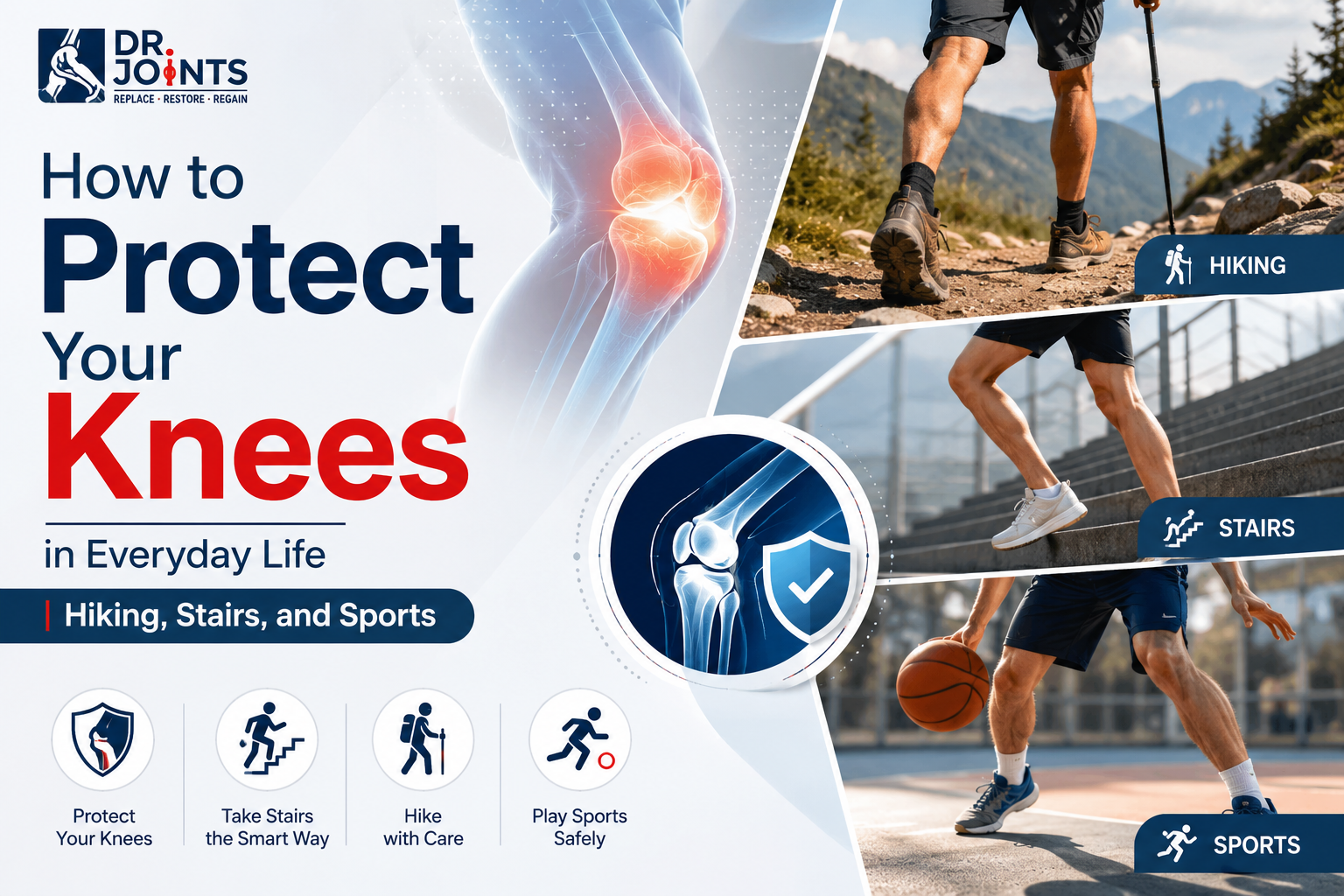
How to Protect Your Knees in Everyday Life (Hiking, Stairs, and Sports)
Your knees play an important role in almost every movement you make. Walking to work, climbing stairs, hiking on a weekend, running, or playing sports all place different demands on the knee joint. While regular physical activity is important for staying healthy, poor technique, weak muscles, sudden increases in exercise, and repeated high-impact movements can sometimes contribute to knee pain or injury.
Protecting your knees does not mean avoiding exercise or giving up activities you enjoy. The goal is to build strength, improve movement control, choose the right equipment, and give your body enough time to adapt. With a few practical habits, you can reduce unnecessary stress on your knees and support better joint health over time.
Why Knee Joint Health Matters
The knee is a complex joint supported by bones, cartilage, muscles, tendons, and ligaments. These structures work together to provide stability and allow the knee to bend, straighten, and support the body during movement.
The quadriceps, hamstrings, glutes, and calf muscles are particularly important because they help control movement and absorb some of the forces placed on the legs. When these muscles are weak or when movement is poorly controlled, the knee may experience additional stress.
Knee injury prevention is therefore not about avoiding movement. It is about preparing the body for movement. Strength training, flexibility exercises, balance work, proper technique, and gradual increases in activity can all contribute to healthier knee function.
For people with certain joint conditions, maintaining strength and mobility may also support Knee Preservation, an approach that aims to maintain the natural knee and preserve its function when appropriate.
How to Protect Your Knees While Hiking
Hiking is a great way to stay active, but long distances, steep climbs, uneven trails, and downhill sections can make the activity more challenging for your knees. Downhill walking can be particularly demanding because the muscles have to control your body as it moves against gravity.
A few simple changes can make hiking safer and more comfortable:
- Use trekking poles: Poles can improve balance and provide additional support on steep or uneven terrain.
- Take shorter steps: Smaller, controlled steps can help you maintain stability, especially while walking downhill.
- Choose supportive footwear: Hiking shoes with good grip can help reduce slipping on uneven or wet surfaces.
- Keep your knees slightly bent: Avoid locking the knees during downhill sections.
- Reduce backpack weight: Carrying unnecessary weight can increase the physical demand on your legs.
- Warm up before hiking: Begin with a few minutes of brisk walking and gentle dynamic movements.
- Take regular breaks: Resting during longer hikes can help reduce fatigue and maintain better movement control.
- Increase hiking gradually: Avoid suddenly increasing distance, elevation, or intensity.
If knee discomfort continues after hiking or starts interfering with regular activities, an orthopedic evaluation can help identify the underlying problem. Depending on the cause, treatment may include physiotherapy, exercise, medication, or other conservative approaches that may help support Knee Preservation.
Protecting Your Knees on Stairs
Climbing and descending stairs require the knees to support body weight while moving through a bent position. Going downstairs may feel particularly difficult for people with muscle weakness, arthritis, previous injuries, or certain kneecap-related problems.
You can reduce unnecessary strain by following a few simple habits:
- Keep your knee generally aligned with your foot.
- Use a handrail if you feel unsteady.
- Avoid rushing, particularly when going downstairs.
- Place your foot securely on each step.
- Strengthen the quadriceps, hamstrings, and glute muscles.
- Follow any specific technique recommended by your healthcare professional.
Occasional discomfort does not always indicate serious damage, but persistent pain should not be ignored. If cartilage damage or arthritis is affecting a specific part of the knee, an orthopedic specialist can assess the joint and discuss suitable options. In selected cases, Knee Resurfacing or another joint-preserving treatment may be considered depending on the individual’s condition.
Knee Injury Prevention During Sports
Sports can place additional demands on the knees because they often involve running, jumping, landing, twisting, sudden stops, and quick changes in direction. Football, basketball, tennis, skiing, and similar activities require good strength and coordination to control these movements.
To help protect your knees during sports:
- Start with a proper warm-up.
- Include dynamic movements before intense activity.
- Practice balance and stability exercises.
- Wear footwear appropriate for your sport and playing surface.
- Learn safe jumping and landing techniques.
- Strengthen both legs evenly.
- Increase training intensity gradually.
- Allow enough recovery between demanding sessions.
- Stop or modify activity if significant pain develops.
Previous knee injuries may also increase the risk of future problems. Returning to sport gradually after an injury and following professional rehabilitation advice can help improve strength and movement control.
When damage is limited to a specific area of the knee, Partial Knee Replacement may be considered for selected patients. Whether this approach is suitable depends on the location and severity of the damage, symptoms, activity level, and overall joint health.
Knee Strengthening Exercises for Better Support
The muscles surrounding the knee act like a support system during movement. Stronger quadriceps, hamstrings, glutes, and calves can help improve stability and control.
Useful exercises may include:
Strength Exercises
- Bodyweight squats
- Step-ups
- Glute bridges
- Wall sits
- Straight-leg raises
- Controlled lunges
Balance Exercises
- Single-leg stands
- Lateral steps
- Controlled step-downs
Flexibility Exercises
- Quadriceps stretches
- Hamstring stretches
- Calf stretches
- Hip-flexor stretches
The quality of movement is more important than simply completing a large number of repetitions. Start at a comfortable level and increase gradually. If an exercise causes sharp, worsening, or persistent pain, stop and seek professional guidance.
People with an existing knee injury, significant swelling, or ongoing pain should consult a physiotherapist or orthopedic professional before beginning a new exercise program.
Everyday Habits That Can Support Knee Health
Small daily habits can make a difference when it comes to long-term joint health. Staying physically active, maintaining a healthy body weight, choosing suitable footwear, and getting enough recovery time can all support comfortable movement.
Low-impact activities such as swimming and cycling can also be useful alternatives when high-impact exercise causes discomfort. These activities allow people to remain active while placing different demands on the joints.
Movement technique matters as well. During exercises such as squats, lunges, and step-downs, try to maintain controlled movement and avoid allowing the knees to collapse inward.
For people with advanced arthritis or significant joint damage, conservative treatment may not always provide enough relief. Depending on the individual’s symptoms and joint condition, an orthopedic specialist may discuss surgical options such as Primary Knee Replacement when appropriate.
Simple Knee Protection Checklist
- Warm up before exercise.
- Increase activity gradually.
- Use trekking poles on challenging hikes.
- Take shorter and controlled steps downhill.
- Wear appropriate footwear.
- Strengthen the muscles around the knee.
- Include balance and flexibility exercises.
- Maintain a healthy body weight.
- Take breaks during demanding activities.
- Avoid exercising through sharp or worsening pain.
- Allow adequate recovery time.
- Seek professional advice when symptoms persist.
When Should You Seek Professional Help?
Knee pain after an unusually demanding activity may sometimes improve with rest and appropriate recovery. However, certain symptoms should be assessed by a healthcare professional.
Consider seeking medical advice if you experience significant swelling, persistent pain, locking, instability, repeated giving way, difficulty putting weight on the leg, or symptoms that continue despite rest.
An orthopedic evaluation can help determine whether the problem is related to muscles, ligaments, cartilage, arthritis, or another condition. For people who require surgical treatment because of advanced joint damage, Robotic Knee Replacement may be an option in selected cases. The decision depends on the patient’s condition, imaging findings, symptoms, activity goals, and overall health.
Frequently Asked Questions
What is the best exercise for protecting the knees?
There is no single exercise that is best for everyone. A combination of strengthening, balance, flexibility, and controlled movement exercises can provide comprehensive support for knee function.
Does hiking damage the knees?
Hiking does not automatically damage healthy knees. However, long distances, steep descents, poor footwear, previous injuries, or suddenly increasing activity can contribute to discomfort or injury.
How can I reduce knee pain when going downstairs?
Move slowly, use the handrail if needed, keep your movements controlled, and work on strengthening the muscles around the knee. Persistent pain should be evaluated by a healthcare professional.
Should I wear a knee brace while playing sports?
A brace may be recommended in certain situations, particularly after specific injuries. However, it should not replace proper rehabilitation, strengthening, or appropriate sports technique.
Why does my knee hurt more while walking downhill?
Downhill walking requires the muscles around the knee to control your body’s movement against gravity. This can increase the workload on the knee compared with walking on level ground.
Final Thoughts
Healthy knees need movement, strength, stability, and appropriate recovery. You do not necessarily need to stop hiking, climbing stairs, running, or playing sports to protect your joints. Instead, focus on preparing your body, using proper technique, choosing suitable footwear, and increasing activity at a manageable pace.
If knee pain becomes persistent or begins affecting everyday activities, getting an early professional evaluation can help identify the cause and guide appropriate treatment. Depending on the condition, options may range from exercise and physiotherapy to joint-preserving treatments or surgery.
For selected patients with advanced knee problems, Robotic Knee Replacement can be considered as part of a modern treatment approach. The most appropriate treatment should always be determined after an individual assessment by a qualified orthopedic professional.
This article is for informational purposes only and is not a substitute for professional medical advice. Always consult a qualified healthcare professional for personalized evaluation and treatment recommendations.